
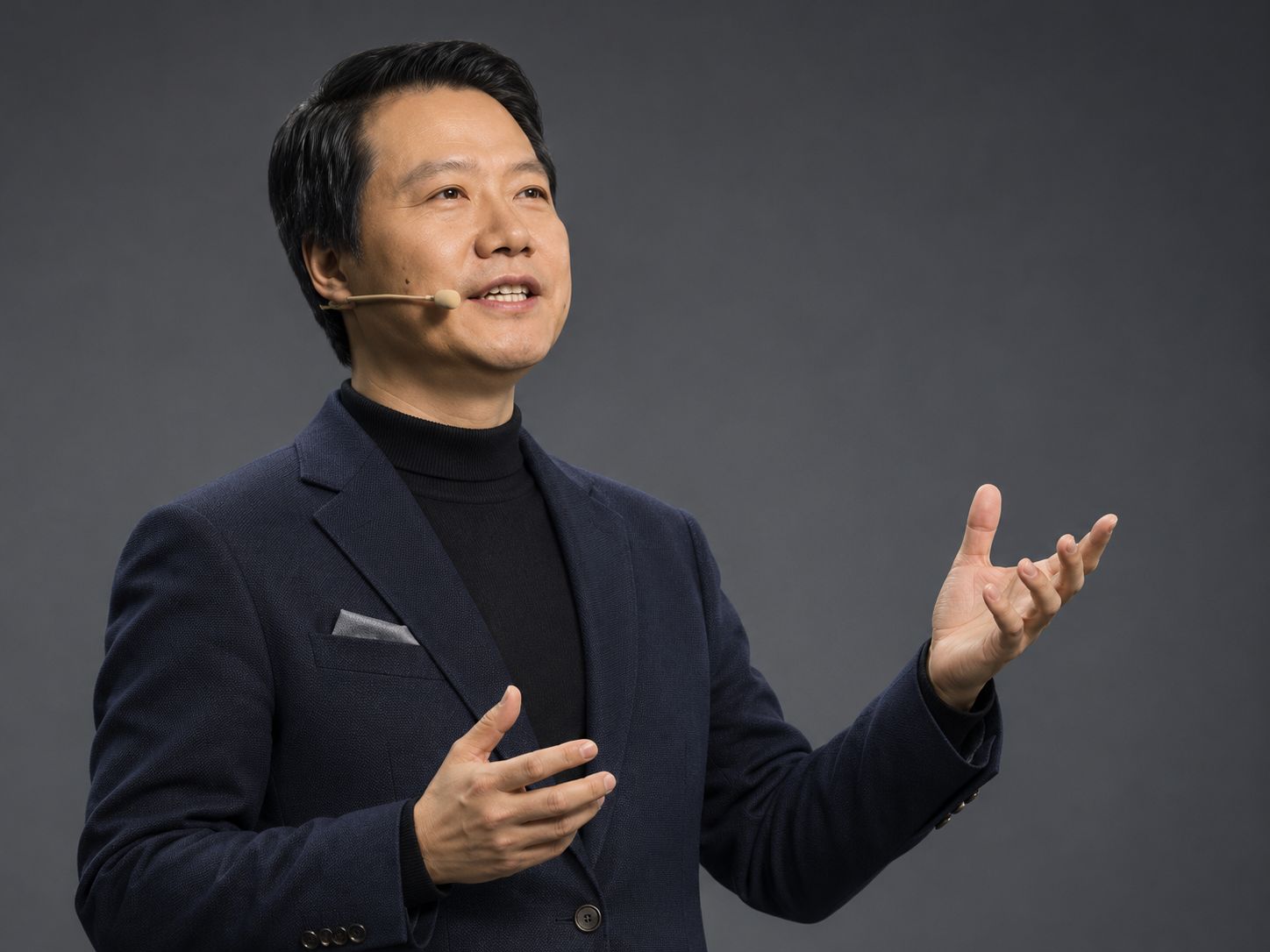
Michael Bloomberg and Lei Jun belong to different generations, operate in different industries, and have built their reputations on opposite sides of the world. Yet their careers reveal an interesting connection: both recognized how technology could transform established markets and used that insight to build internationally influential businesses.
Bloomberg, the American entrepreneur behind Bloomberg LP, helped change how financial professionals access market information. He later served three terms as mayor of New York City and became an influential philanthropist. Lei Jun, the Chinese technology executive who co-founded Xiaomi, helped make advanced consumer electronics more accessible and subsequently expanded into electric vehicles and connected devices.
The comparison between Michael Bloomberg and Lei Jun is therefore about more than personal wealth. It highlights two entrepreneurial strategies, two approaches to leadership, and two distinct forms of technological influence.
There is, however, an important distinction. No publicly verified evidence establishes a personal partnership, family relationship, or formal business collaboration between Bloomberg and Lei Jun. Their careers can be meaningfully compared without suggesting a relationship that has not been documented.
Quick Bio: Michael Bloomberg and Lei Jun
| Detail | Michael Bloomberg | Lei Jun |
|---|---|---|
| Full name | Michael Rubens Bloomberg | Lei Jun (雷军) |
| Date of birth | February 14, 1942 | December 1969 |
| Age (November 2026) | 84 years | 56 years |
| Birthplace | Boston, Massachusetts, USA | China |
| Nationality | American | Chinese |
| Education | Johns Hopkins University; Harvard Business School | Wuhan University |
| Main profession | Entrepreneur, philanthropist, former politician | Technology entrepreneur and investor |
| Major company | Bloomberg LP | Xiaomi Corporation |
| Company founded | 1981 | 2010 |
| Other organizations | Bloomberg Philanthropies, United Nations initiatives | Kingsoft, Kingsoft Office |
| Principal industry | Financial technology, information and media | Consumer electronics, software and electric vehicles |
| Public recognition | Former New York City mayor and global philanthropist | Xiaomi founder, chairman and CEO |
Who Is Michael Bloomberg?
Michael Bloomberg is an American businessman best known for founding Bloomberg LP, a global financial information and technology company.
Born in Boston and raised in Medford, Massachusetts, Bloomberg studied electrical engineering at Johns Hopkins University before earning an MBA from Harvard Business School.
His professional career began at Salomon Brothers in 1966. During his time there, he gained experience in financial markets, trading operations, and information systems.
After leaving the investment firm in 1981, Bloomberg established a business dedicated to delivering financial information through advanced computer technology.
That company developed into Bloomberg LP, whose products became important tools for financial institutions, investment professionals, and corporations.
Bloomberg later entered politics, serving as the 108th mayor of New York City from January 2002 until December 2013.
His subsequent activities have focused heavily on philanthropy, public health, environmental policy, education, and government innovation.
Who Is Lei Jun?
Lei Jun is a Chinese entrepreneur and technology executive best known as the founder, chairman, and chief executive officer of Xiaomi Corporation.
Born in December 1969, he graduated from Wuhan University in July 1991 with a bachelor’s degree in computer science.
He joined Kingsoft in 1992 and became its chief executive in 1998. His work helped develop the company’s software operations during a period of rapid technological change in China.
Lei also founded Joyo.com, an online retail platform, in 2000. Amazon acquired the business in 2004.
These experiences gave him considerable knowledge of software development, online commerce, investment, and business management.
In April 2010, Lei co-founded Xiaomi with a team that included Lin Bin.
Under his leadership, Xiaomi developed from a technology startup into an international company producing smartphones, connected household products, software, and electric vehicles.
Lei remains closely associated with Xiaomi’s products, corporate strategy, and public identity.
How Bloomberg Built His Business
Bloomberg’s entrepreneurial breakthrough came from recognizing a practical problem within financial markets.
During the early 1980s, financial professionals needed faster and more organized access to market information. Existing systems did not always provide the speed, integration, and analytical capabilities users required.
Bloomberg’s company developed computer-based financial information services designed to address those limitations.
The Bloomberg Terminal became its signature product, combining market data, analytical tools, financial news, and communication features in a professional platform.
Rather than competing primarily on the price of physical products, Bloomberg LP built a business around specialized information and services.
Its customers included financial institutions and professionals for whom timely information could influence major financial decisions.
The company subsequently expanded into financial journalism, television, radio, and other information services.
Bloomberg News became a prominent part of its broader media operations.
This business model illustrates Bloomberg’s central entrepreneurial insight: information becomes particularly valuable when users can access, analyze, and apply it efficiently.
How Lei Jun Created Xiaomi
Lei Jun entered the smartphone industry at a time when mobile technology was rapidly changing consumer expectations.
Xiaomi was established on April 6, 2010, initially emphasizing software and the mobile internet.
The company introduced its first smartphone in 2011, helping establish a business model centered on competitive pricing, digital engagement, and technological innovation.
Unlike traditional manufacturers that relied heavily on conventional retail channels, Xiaomi developed a strong relationship with online communities and technology enthusiasts.
Customer feedback became an important element of its product-development approach.
As Xiaomi expanded, its product portfolio grew beyond smartphones to include wearable technology, televisions, smart-home equipment, and other connected devices.
The company completed its stock-market listing in Hong Kong on July 9, 2018.
Lei’s strategy demonstrated how technology companies could combine hardware, software, internet services, and customer communities within one commercial ecosystem.
Their Different Business Models
Although both entrepreneurs established technology-driven companies, their businesses serve fundamentally different customers.
Bloomberg LP concentrates on professional financial information, data services, analytics, and business media.
Its core offering is not an everyday consumer device. It is specialized infrastructure used by people and organizations working with financial markets.
Xiaomi operates primarily in consumer electronics and smart manufacturing.
Its products include smartphones and connected devices designed for broad consumer markets, alongside an expanding electric-vehicle business.
These differences also influence how the companies generate revenue and develop customer relationships.
Bloomberg LP is particularly associated with professional subscriptions and financial information services.
Xiaomi depends on a combination of hardware sales, internet services, and related business activities.
Both companies use technology to create value, but one emphasizes professional information while the other emphasizes connected consumer experiences.
Bloomberg’s Political Career
Michael Bloomberg’s career differs significantly from Lei Jun’s because he entered elected government.
Following his election in November 2001, Bloomberg became mayor of New York City in January 2002.
His administration confronted major challenges associated with economic recovery, public safety, education, urban development, and public health.
He promoted initiatives involving smoking restrictions, environmental sustainability, and healthier living.
His record also attracted substantial criticism.
The expansion of the New York Police Department’s stop-and-frisk practices became a major controversy. In 2013, a federal court found that the department’s implementation of those practices violated constitutional protections.
Another disputed initiative involved proposed limits on the size of sugary drinks sold at certain establishments. New York’s highest court ultimately rejected the regulation in 2014 because the Board of Health had exceeded its regulatory authority.
Bloomberg later sought the Democratic presidential nomination in 2020 but withdrew on March 4 and endorsed Joe Biden.
His political record remains an important part of any balanced assessment of his public career.
Lei Jun’s Role in China’s Technology Industry
Lei Jun’s influence has developed through business leadership rather than elected office.
His experience at Kingsoft helped establish his reputation in software, while his involvement with Joyo.com and other technology investments expanded his entrepreneurial activities.
Xiaomi subsequently became his most internationally recognized achievement.
The company emerged as an important participant in the global smartphone market, competing through product development, pricing, and international distribution.
Lei’s career also demonstrates the growing relationship between China’s software, manufacturing, and consumer-technology industries.
His influence extends beyond Xiaomi. He has remained associated with Kingsoft as chairman and has participated in investments involving other technology businesses.
Unlike Bloomberg, Lei has not developed a comparable career in electoral politics.
His public leadership is primarily connected with corporate strategy, technological development, and industrial innovation.
Xiaomi’s Expansion Into Electric Vehicles
One of the most significant developments in Lei Jun’s recent career has been Xiaomi’s move into electric vehicles.
The company officially launched its first-generation Xiaomi SU7 electric sedan in March 2024.
This expansion marked a substantial change for a business originally associated with software and smartphones.
Automobile manufacturing involves different challenges, including vehicle engineering, production systems, safety standards, and long-term customer support.
Xiaomi’s strategy involves connecting its electric vehicles with its existing ecosystem of smartphones, software, and smart-home products.
The company has subsequently expanded its automotive portfolio, including additional SU7 variants and the YU7 family.
This development places Lei among technology executives seeking to connect consumer electronics with the automotive industry.
Nevertheless, the sector remains highly competitive, and product safety, manufacturing quality, customer trust, and profitability remain important considerations.
Xiaomi’s automotive expansion is a significant commercial undertaking, not a guarantee of future success.
Philanthropy and Social Contributions
Both Michael Bloomberg and Lei Jun have supported educational and social initiatives, although their philanthropic activities differ in scale, structure, and emphasis.
Bloomberg Philanthropies operates across public health, education, environmental protection, the arts, and government innovation.
Bloomberg has supported major initiatives at Johns Hopkins University, including substantial commitments to student financial assistance and medical education.
His international activities include work with the World Health Organization and the United Nations on public health and climate-related issues.
Lei Jun has also supported education.
In November 2023, he donated 1.3 billion yuan to Wuhan University, his alma mater.
The contribution was intended to support research, technological innovation, and educational development.
This donation represents a major publicly documented example of Lei’s philanthropy.
Both men therefore have established records of supporting education, although Bloomberg’s philanthropic organization has a broader institutional presence across multiple policy areas.
Leadership Styles and Entrepreneurial Thinking
Bloomberg and Lei Jun provide useful examples of how leadership can be adapted to different markets.
Bloomberg built a company serving professional customers whose work requires dependable financial information.
His business strategy emphasized practical utility, technological infrastructure, and long-term customer relationships.
Lei developed Xiaomi through a consumer-oriented approach that combined competitive hardware pricing with software, online engagement, and brand loyalty.
His public role also differs from Bloomberg’s.
Lei frequently represents Xiaomi in product announcements and discussions of technological strategy.
Bloomberg’s public identity extends beyond his company to government, philanthropy, and international policy initiatives.
Their careers demonstrate that entrepreneurial influence does not depend on following one specific business model.
However, comparisons between leadership styles are interpretations of their documented professional decisions, not evidence that either individual follows a fixed personal philosophy.
Michael Bloomberg and Lei Jun: Net Worth
Both men are internationally recognized billionaire entrepreneurs, but precise personal wealth figures require caution.
Bloomberg’s wealth is closely associated with his ownership interest in Bloomberg LP, a privately held company.
Lei Jun’s wealth is associated with business interests that include Xiaomi and other investments.
Because Xiaomi is publicly traded, movements in its share price can influence estimates of Lei’s holdings.
Bloomberg’s estimated fortune also depends on assumptions about private-company valuation, ownership, assets, and liabilities.
Published wealth rankings may therefore disagree or change substantially over time.
There is no single permanent net-worth figure for either entrepreneur. Without a dated, independently verified estimate, assigning a precise current amount would be misleading.
Likewise, publicly reported wealth should not be confused with the amount of cash an individual personally holds.
Family and Personal Life
Michael Bloomberg has two daughters, Emma Bloomberg and Georgina Bloomberg, from his former marriage to Susan Brown.
Emma has been involved in philanthropic and nonprofit activities, while Georgina is known for her equestrian career.
Bloomberg’s family relationships have been covered publicly, although they are separate from the business comparison with Lei Jun.
Reliable corporate biographies of Lei primarily document his professional background, education, investments, and leadership positions.
Detailed information about his immediate family is less central to those official accounts.
Claims involving the names, occupations, or private circumstances of Lei’s relatives should not be repeated without reliable verification.
There is no established family relationship between Michael Bloomberg and Lei Jun.
Are Michael Bloomberg and Lei Jun Connected?
The question of whether Michael Bloomberg and Lei Jun have a personal or commercial relationship deserves a clear answer.
Both operate within the international technology and business landscape, but their companies have different primary activities.
Bloomberg LP provides financial information and media services, while Xiaomi develops consumer technology and electric vehicles.
Bloomberg’s news and professional information businesses have reported on Xiaomi and its development.
Such reporting is not evidence of a personal partnership between the founder of Bloomberg LP and Xiaomi’s chief executive.
No reliably documented joint venture, family connection, or formal partnership between the two men has been established in the public information reviewed.
It would therefore be inaccurate to present them as business partners or to suggest they founded a company together.
Why Are Their Names Searched Together?
People researching Michael Bloomberg and Lei Jun may be interested in comparing internationally prominent business founders.
Several factors make this comparison useful.
First, both built highly influential companies by identifying opportunities created by technological change.
Second, their businesses illustrate different approaches to generating commercial value.
Third, both have accumulated substantial wealth through entrepreneurship and investment.
Finally, their careers provide an international perspective on technology leadership, connecting American financial information services with China’s consumer-electronics industry.
Another potential source of confusion is the appearance of Xiaomi-related reporting within Bloomberg-branded financial media.
Readers should distinguish between Michael Bloomberg as an individual, Bloomberg LP as a business, and Bloomberg News as a news organization.
A company’s appearance in Bloomberg’s reporting does not establish a personal connection with Michael Bloomberg.
The Most Important Differences
The strongest comparison between the two entrepreneurs lies in the contrast between their professional achievements.
Bloomberg transformed financial information into an international technology and media business before moving into politics and large-scale philanthropy.
Lei helped build an internationally recognized consumer-technology company after developing his expertise in software and online commerce.
Bloomberg’s legacy includes financial-market infrastructure, three terms leading New York City, and extensive charitable commitments.
Lei’s record includes software entrepreneurship, Xiaomi’s international expansion, and the company’s entry into electric vehicles.
Their companies also differ in ownership structures, customers, products, and competitive pressures.
Bloomberg LP remains privately held, while Xiaomi is publicly listed in Hong Kong.
These distinctions matter more than superficial comparisons of billionaire rankings.
Another topic waiting For you : Larry Ellison and Kathy Warden: Their Careers, Leadership, and the Connection Explained
Frequently Asked Questions
1. Who are Michael Bloomberg and Lei Jun?
Michael Bloomberg is an American entrepreneur, founder of Bloomberg LP, philanthropist, and former mayor of New York City. Lei Jun is a Chinese technology entrepreneur best known as the founder, chairman, and CEO of Xiaomi Corporation.
2. Are Michael Bloomberg and Lei Jun business partners?
There is no publicly verified evidence establishing a formal business partnership between them. Bloomberg LP and Xiaomi operate in different principal business sectors.
3. Which companies did Michael Bloomberg and Lei Jun establish?
Michael Bloomberg founded the financial information business that became Bloomberg LP in 1981. Lei Jun co-founded Xiaomi in 2010 and previously established Joyo.com, which Amazon acquired in 2004.
4. Is Michael Bloomberg wealthier than Lei Jun?
Published billionaire rankings have generally placed Bloomberg above Lei Jun. However, personal wealth estimates fluctuate, and an exact comparison requires figures from the same source and valuation date.
5. What is Lei Jun best known for?
Lei Jun is best known for co-founding Xiaomi and leading its development into a major consumer-electronics business. He is also associated with Kingsoft, technology investments, and Xiaomi’s expansion into electric vehicles.
6. Has Lei Jun worked in politics like Michael Bloomberg?
Lei Jun is primarily recognized for his business leadership. Michael Bloomberg served as New York City’s mayor from 2002 to 2013 and participated in the 2020 Democratic presidential primary.
7. Why are Bloomberg and Lei Jun compared?
They are compared because both established influential technology-focused businesses and became prominent entrepreneurs. Their different industries, markets, and career paths make them useful subjects for examining international business leadership.
Conclusion
Michael Bloomberg and Lei Jun represent two distinctive paths to entrepreneurial success.
Bloomberg built a business around financial information, subsequently pursued elected office, and became an influential philanthropist. Lei Jun developed his career through software, investment, consumer electronics, and automotive technology.
Their achievements highlight the importance of recognizing technological opportunities, understanding customer needs, and adapting business strategies as industries evolve.
Although both are prominent business figures, no verified personal or formal business relationship between them has been established.
Their stories are best understood independently and compared through their documented achievements rather than through unsupported claims about connections, wealth, or private relationships.
