


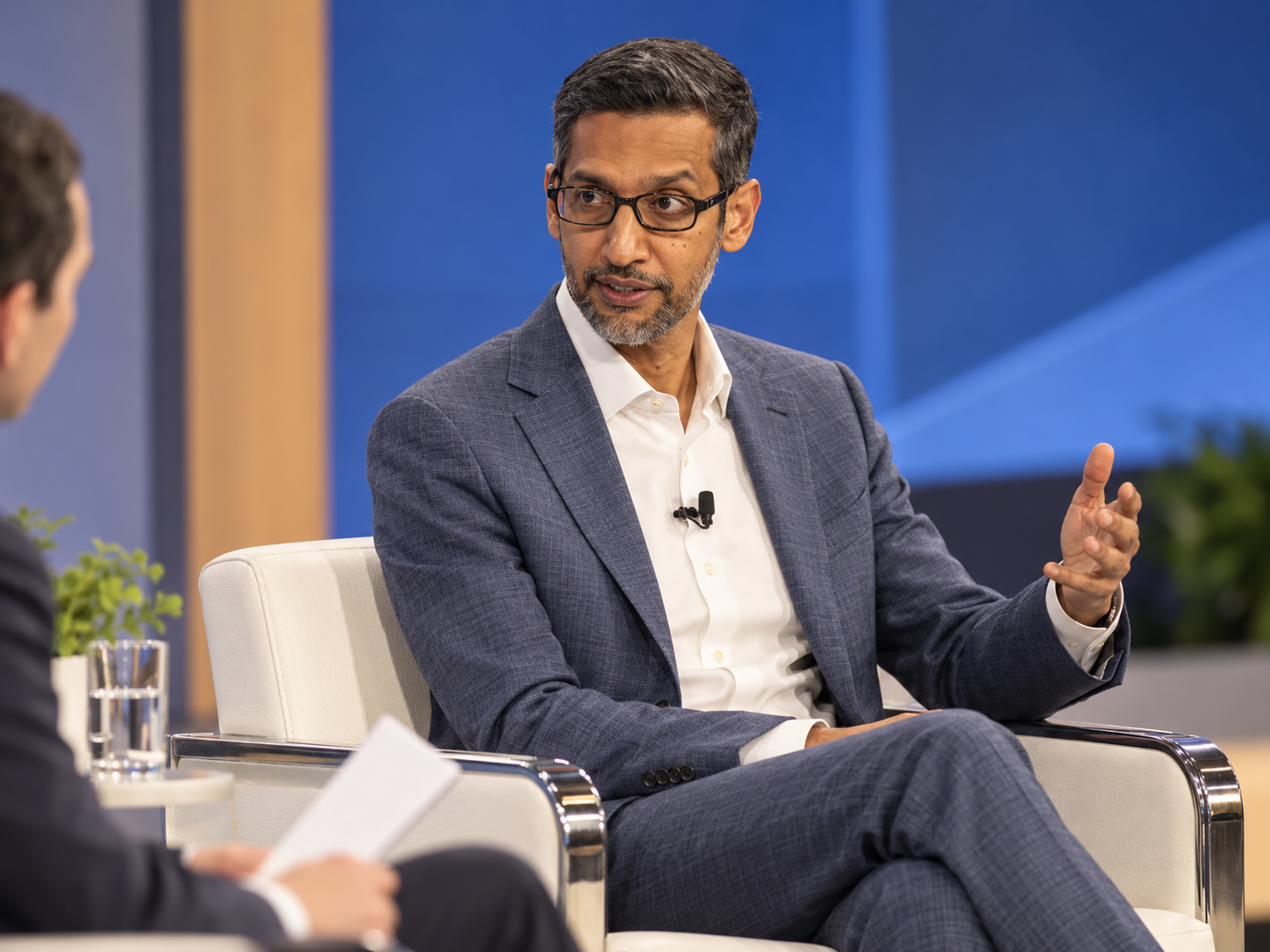
Sundar Pichai and Carl Icahn are two of the most recognizable names in modern American business, yet they built their influence in very different ways. Pichai rose through the technology industry to lead Google and its parent company, Alphabet. Icahn became one of Wall Street’s best-known activist investors, using large ownership stakes to push companies toward strategic, financial, or governance changes.
Because both men have been connected with major technology companies, searches for Sundar Pichai and Carl Icahn can create the impression that they were business partners, rivals, or participants in the same corporate battle.
The public record supports a much narrower connection.
There is no well-documented long-term business partnership between Pichai and Icahn. Their clearest historical overlap comes from Google’s acquisition of Motorola Mobility, announced in 2011. At that time, Icahn and related entities were major Motorola Mobility shareholders, while Pichai was already a senior figure at Google. However, official merger records do not identify Pichai as one of Google’s principal negotiators in the transaction.
Understanding that distinction is essential. The real story is not a secret partnership or personal rivalry, but an indirect intersection between two very different forms of corporate power: executive leadership and shareholder activism.
Quick Bio: Sundar Pichai and Carl Icahn
| Detail | Sundar Pichai | Carl Icahn |
|---|---|---|
| Full name | Pichai Sundararajan, commonly known as Sundar Pichai | Carl Celian Icahn |
| Profession | Technology executive | Investor and businessman |
| Main field | Technology and corporate leadership | Investing and shareholder activism |
| Best known for | Leading Google and Alphabet | Activist investing and Icahn Enterprises |
| Current major role | CEO of Google and Alphabet | Chairman of Icahn Enterprises |
| Joined major organization | Joined Google in 2004 | Began Wall Street career in 1961 |
| Leadership milestone | Became Google CEO in 2015 | Founded Icahn & Co. in 1968 |
| Additional leadership milestone | Became Alphabet CEO in 2019 | Built major positions in numerous public companies |
| Education | IIT Kharagpur, Stanford University, Wharton School | Princeton University |
| Main source of influence | Executive authority, products and corporate strategy | Ownership stakes and investor activism |
| Major technology connection | Search, Chrome, Android, AI, Cloud and other Google products | Investments involving companies including Motorola, Apple, Yahoo, eBay and others |
| Documented connection between them | Indirect connection through Google and Motorola Mobility | Indirect connection through Motorola Mobility share ownership |
Alphabet continues to identify Pichai as CEO of both Alphabet and Google, while Icahn Enterprises identifies Icahn as chairman of its board.
Who Is Sundar Pichai?
Sundar Pichai is a technology executive whose career is closely associated with Google’s transformation from a search-focused internet company into a much broader technology business.
He joined Google in 2004. Alphabet’s corporate disclosures state that he later led product and engineering responsibilities across major Google products and platforms, including Search, Chrome, Maps, Android, Gmail and Google Workspace.
Pichai became CEO of Google in October 2015 after Google reorganized under the newly created parent company Alphabet.
Larry Page, Google’s co-founder and then-CEO, explained during the restructuring that Pichai had increasingly taken responsibility for Google’s core internet businesses. Pichai later became CEO of Alphabet in December 2019, giving him leadership responsibility over the broader corporate group.
His education combines engineering and business. Alphabet filings state that he studied metallurgical engineering at the Indian Institute of Technology Kharagpur, earned a master’s degree in materials science and engineering from Stanford University and received an MBA from the Wharton School of the University of Pennsylvania.
Today, his responsibilities extend far beyond the products associated with his early career.
Google Search, YouTube, Android, Google Cloud, advertising, hardware and artificial intelligence all sit within businesses operating under Alphabet. In 2026, Alphabet continued publicly identifying Pichai as CEO of Alphabet and Google, with artificial intelligence remaining central to the company’s strategy.
Who Is Carl Icahn?
Carl Icahn represents a fundamentally different business model.
Rather than spending most of his career operating one large technology company, Icahn built his reputation as an investor who acquires meaningful positions in companies and attempts to influence what their management teams and boards do.
Icahn Enterprises states that he remains chairman of its board. The company describes itself as a diversified holding company with interests that have included investment, energy, automotive, real estate, food packaging and other businesses.
Icahn began his Wall Street career in 1961.
According to Icahn Enterprises’ regulatory disclosures, he formed Icahn & Co. in 1968, initially focusing on areas such as arbitrage and options trading. Beginning in the late 1970s, he increasingly acquired substantial or controlling positions in individual companies. SEC
His investment history has included numerous major corporate names.
Icahn Enterprises has documented positions over the decades involving companies such as TWA, Texaco, RJR Nabisco, Motorola, Yahoo, Netflix, Apple, eBay, PayPal, Xerox and many others. SEC
That history helped make Icahn one of the most recognizable figures associated with shareholder activism.
Carl Icahn’s Education and Early Career
Icahn graduated from Princeton University in 1957.
Princeton records state that he studied philosophy and received an award for his senior thesis. He subsequently attended medical school before leaving that path and eventually entering finance.
His background is noteworthy because it differs considerably from Pichai’s engineering and technology-focused education.
While Pichai eventually entered the technology sector through technical and product-management work, Icahn developed his career through financial markets, securities trading and corporate investments.
That difference helps explain why their involvement with companies has usually taken very different forms.
Did Sundar Pichai and Carl Icahn Work Together?
There is no reliable public evidence establishing Sundar Pichai and Carl Icahn as long-term business partners.
There is also no evidence that Icahn worked as a Google or Alphabet executive, or that Pichai held a management position at Icahn Enterprises.
The most significant documented intersection between their professional histories comes from Motorola Mobility.
Even there, however, describing the situation as Pichai and Icahn personally working together would go beyond what the available evidence establishes.
Official Motorola merger documents identify several Google representatives who participated directly in the acquisition negotiations. Sundar Pichai is not named among the principal Google negotiators described in that transaction history.
The Motorola Mobility Connection
Motorola Mobility is the key to understanding why Pichai and Icahn can legitimately appear in the same business discussion.
Motorola Mobility became an independent publicly traded company in January 2011 following its separation from Motorola.
At the time, mobile computing had become one of the technology industry’s most strategically important areas. Google’s Android operating system was expanding rapidly, while technology companies were also engaged in increasingly important disputes over mobile intellectual property.
Motorola Mobility possessed an especially large patent portfolio.
Company filings later described approximately 24,000 patents and patent applications covering areas including wireless communications, audio, video, security, user interfaces, product design and smartphone-related technologies.
That intellectual property was an important part of the company’s strategic value.
Carl Icahn’s Motorola Stake
Carl Icahn was not a minor Motorola Mobility shareholder.
Motorola’s official merger proxy showed that Icahn and related entities beneficially owned approximately 33.5 million shares, representing about 11.39% of Motorola Mobility.
That ownership position gave him a significant financial interest in the future of the company.
Icahn had also been involved in discussions about Motorola Mobility’s strategic options and its intellectual-property assets.
The merger record shows that Motorola executives were considering the value of the company’s patents and broader strategic alternatives during the same period in which Google’s interest in acquiring Motorola was developing.
Google’s $12.5 Billion Motorola Deal
Google and Motorola Mobility publicly announced their merger agreement on August 15, 2011.
Google agreed to acquire Motorola Mobility for $40 per share in cash, valuing the announced transaction at approximately $12.5 billion. The offer represented a 63% premium over Motorola Mobility’s closing share price on August 12, 2011.
Google CEO Larry Page publicly presented the acquisition as an opportunity to strengthen the Android ecosystem.
The transaction was significant because Motorola was both an Android hardware manufacturer and the owner of a substantial intellectual-property portfolio.
Motorola shareholders later approved the merger overwhelmingly in November 2011.
The acquisition ultimately closed on May 22, 2012, making Motorola Mobility a wholly owned Google subsidiary.
Was Sundar Pichai Running Google During the Deal?
No.
This is one of the most important timeline details.
Sundar Pichai worked at Google in 2011, but Larry Page was Google’s CEO when the Motorola Mobility acquisition was announced.
Pichai would not become Google CEO until October 2015, approximately four years later.
Therefore, describing the Motorola transaction as a deal between “Sundar Pichai’s Google and Carl Icahn” can be misleading unless the historical roles are made clear.
Pichai was already an important Google executive, but he was not the company’s chief executive during the transaction.
Did Pichai Personally Negotiate With Icahn?
The available official transaction record does not establish that he did.
Motorola’s detailed merger history identifies Google executives and representatives involved in the negotiations, including then-CEO Larry Page and senior executives associated with Google’s corporate development and legal operations.
The filing does not identify Sundar Pichai as a principal acquisition negotiator.
Icahn did have a direct interest in the outcome as a major Motorola shareholder.
The same filing records that shortly before the merger agreement was approved, Motorola director Daniel Ninivaggi informed the Motorola board that Icahn intended to support the proposed merger without entering into a voting agreement.
That is genuine documentary evidence connecting Icahn to the transaction.
It is not evidence of a Pichai-Icahn negotiation.
Why Their Names Are Searched Together
Search behavior often connects prominent individuals who appear somewhere within the same corporate history.
With Pichai and Icahn, several factors may contribute.
First, Pichai is now so closely associated with Google that historical Google transactions are sometimes retrospectively associated with him, even when another executive was CEO at the time.
Second, Icahn had major investments in technology companies, making him a recurring figure in stories involving Silicon Valley and large technology businesses.
Third, Motorola Mobility provides a genuine historical link.
Icahn was one of Motorola Mobility’s most significant shareholders, while Pichai was a senior Google executive during the period when Google acquired the company.
The mistake occurs when that indirect overlap is turned into an unsupported personal partnership, rivalry or negotiation.
Two Very Different Forms of Business Power
The comparison between Pichai and Icahn is useful precisely because their careers illustrate different ways of exercising corporate influence.
Pichai operates primarily from inside a company.
His authority comes from executive leadership. He oversees corporate strategy, technology investment, product development, organizational priorities and major businesses operating under Google and Alphabet.
His career progression also reflects the traditional executive route: joining a company, taking responsibility for increasingly important products and eventually becoming chief executive.
Icahn historically operated differently.
His influence has generally come through ownership.
By acquiring substantial positions in companies, he could advocate changes involving management, corporate structure, asset sales, capital allocation, board representation or other strategic decisions.
One model is based primarily on managerial authority.
The other is based largely on shareholder power.
Another topic : John Collison and Al Pacino: Is There a Real Connection Between Them?
Pichai’s Role in Google’s Technology Evolution
Pichai’s importance to Google extends well beyond his CEO title.
Alphabet’s official biography credits him with leadership responsibilities across several of Google’s most important products, including Chrome, Android, Search, Gmail and Maps.
Chrome became one of the world’s most widely used web browsers, while Android developed into a dominant mobile operating system.
In more recent years, Pichai’s leadership has increasingly centered on artificial intelligence.
Alphabet has described itself as an AI-first company, and Pichai has overseen investments in AI infrastructure, Google DeepMind, Gemini models, AI-enhanced Search and related services.
During Alphabet’s 2026 earnings discussions, he continued emphasizing AI development, compute capacity, Gemini and Google Cloud as important areas of investment.
Icahn’s Legacy in Shareholder Activism
Icahn’s influence has been built over a considerably longer period.
His career stretches back more than six decades, and his investing style became closely associated with aggressive efforts to unlock what he viewed as unrealized corporate value.
Over time, terminology surrounding investors such as Icahn changed.
The term “corporate raider” was frequently used during earlier decades, while “activist investor” later became the more common description for investors who acquire stakes and campaign for corporate changes.
Icahn Enterprises’ own filings document a remarkably broad history of investments across industries, including technology, transportation, energy, pharmaceuticals, entertainment and consumer businesses.
That breadth is another important difference from Pichai, whose professional reputation is overwhelmingly connected to Google and Alphabet.
Are They Friends or Personal Associates?
There is no reliable public information establishing a notable personal friendship between Sundar Pichai and Carl Icahn.
Likewise, there is no well-documented personal feud between them.
Public information primarily supports discussion of their corporate careers rather than any significant personal relationship.
Claims describing the pair as close associates, long-term partners or major personal rivals should therefore be treated cautiously unless supported by credible documentation.
Are Their Net Worths Publicly Confirmed?
Exact personal net worth is not a formally verified figure for either man.
Financial publications sometimes publish estimates based on known assets, public stockholdings and other information, but those figures can change quickly and may not account for every private asset, liability or ownership arrangement.
For that reason, presenting a precise current net-worth figure as an established fact would be misleading.
The more reliable distinction is that Pichai has accumulated wealth primarily through executive compensation and equity connected with Alphabet, while Icahn’s wealth has historically been tied primarily to investments and ownership interests.
Frequently Asked Questions
Are Sundar Pichai and Carl Icahn business partners?
There is no reliable public evidence showing that they have operated as business partners. Their clearest documented professional connection is indirect and relates to Google’s acquisition of Motorola Mobility.
What connects Sundar Pichai and Carl Icahn?
The main historical connection is Motorola Mobility. Icahn and related entities owned approximately 11.39% of Motorola Mobility when Google agreed to acquire the company, while Pichai was already a senior Google executive.
Did Sundar Pichai negotiate Google’s Motorola purchase with Carl Icahn?
Official Motorola merger records do not identify Pichai as one of the principal Google executives conducting the acquisition negotiations. It would therefore be unsupported to describe the transaction as a direct negotiation between Pichai and Icahn.
Was Sundar Pichai Google’s CEO when Motorola was acquired?
No. Larry Page was Google’s CEO when the acquisition was announced in August 2011 and when it closed in May 2012. Pichai became Google CEO in October 2015.
How much of Motorola Mobility did Carl Icahn own?
Motorola’s merger proxy reported that Icahn and related entities beneficially owned approximately 33.5 million shares, equal to about 11.39% of the company’s outstanding shares.
What are Sundar Pichai and Carl Icahn best known for?
Pichai is best known for leading Google and Alphabet and for his involvement in major Google products and AI strategy. Icahn is best known for decades of investing and shareholder activism involving numerous large public companies.
Do Pichai and Icahn have similar business styles?
Not particularly. Pichai exercises influence mainly as an executive responsible for running large technology businesses. Icahn historically exercised influence primarily as an investor and shareholder seeking changes at companies in which he owned significant stakes.
Conclusion
The relationship between Sundar Pichai and Carl Icahn is far less direct than the pairing of their names might suggest.
There is no well-documented business partnership, sustained professional collaboration or personal rivalry between them.
Their strongest factual connection comes from Google’s acquisition of Motorola Mobility. Icahn and related entities controlled about 11.39% of Motorola Mobility at the time, giving him a substantial financial interest in the transaction. Google announced its approximately $12.5 billion agreement to acquire Motorola in August 2011 and completed the acquisition in May 2012.
Pichai was already an influential Google executive during that period, but he was not Google CEO and is not identified in Motorola’s detailed merger history as a principal acquisition negotiator.
The broader comparison remains valuable. Sundar Pichai represents executive influence built through technology leadership and corporate management. Carl Icahn represents shareholder influence built through investment, ownership and corporate activism.
Keeping those roles—and the 2011 timeline—clear provides a more accurate explanation than treating them as partners or direct opponents.
